Why Leather Cracks
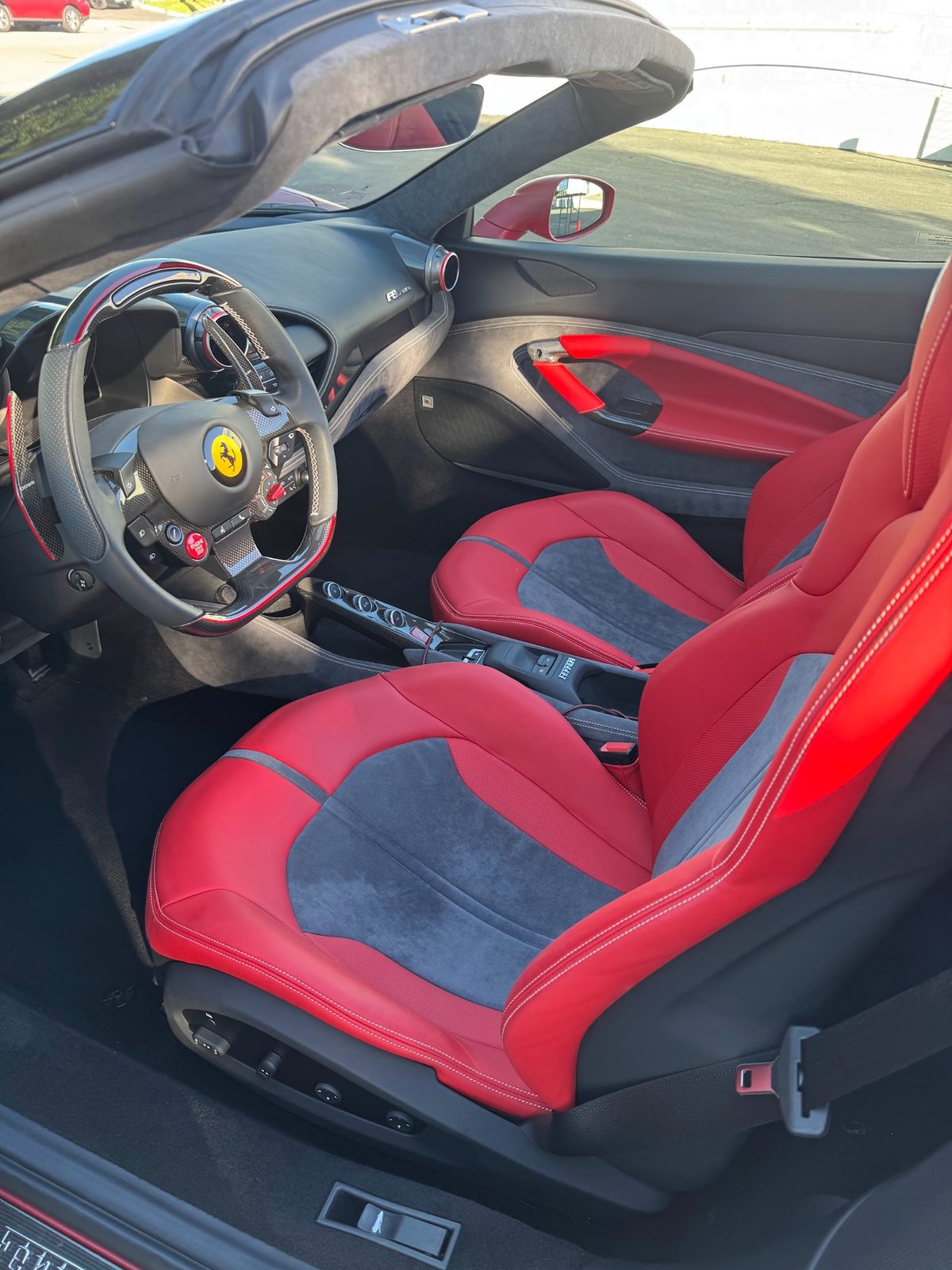
Body oils, sweat and dirt build up in the grain and act like sandpaper every time you slide in and out. Heat dries out the leather, and dry leather creases and splits where it flexes most: the driver's bolster and seat base.
How To Clean It
- Vacuum seams and perforations first.
- Spray a pH-balanced leather cleaner onto a soft brush, not the seat.
- Agitate gently in small sections.
- Wipe the lifted dirt away with microfiber.
How To Condition It
Apply a non-greasy conditioner with an applicator pad, let it absorb, then buff off any excess so it does not transfer to clothes.
What To Avoid
- All-purpose cleaners and household wipes
- Heavy, greasy conditioners that attract dirt
- Soaking perforated or ventilated seats
Professional Care
Our Executive Interior includes leather cleaning and conditioning along with steam and extraction for the rest of the cabin.
Perforated And Ventilated Seats
Perforated leather traps dirt in its holes. Use minimal product, brush gently, and never let liquid soak in, or it can reach the foam and electronics underneath.
Light Leather And Dye Transfer
Light leather picks up denim dye from jeans. Regular cleaning keeps it from setting, and a protectant makes it easier to wipe off.
Steering Wheels
The steering wheel is the dirtiest leather in the car, coated with skin oils and lotion. Clean it gently and avoid conditioners that leave it slippery.
Signs Leather Needs Attention
- A shiny, slick look on the bolsters (that is dirt, not shine)
- Stiffness or creasing
- Color rubbing off on light clothing
How Often
In Southern California sun, every 2–3 months for cars parked outside and 4–6 months for garaged cars. See also protecting your interior from sun and heat.