
Why Clean It At All
A clean engine bay makes leaks easy to spot, keeps dirt off belts and seals, and makes a big difference when you sell the car. Buyers notice.
What Can Go Wrong
High-pressure water forced into connectors, the alternator or the air intake is what causes trouble. So do harsh degreasers left to dry on plastics and rubber.
How We Do It
- Work on a cool engine only.
- Cover the intake, alternator and exposed electrical connections.
- Apply a gentle degreaser and agitate with brushes.
- Rinse with low pressure, controlled water.
- Blow dry with compressed air.
- Dress plastics and hoses with a water-based protectant.
EVs And Hybrids
High-voltage components are marked in orange. We clean around them with damp towels only, no rinsing.
Add It To Your Detail
Engine bay cleaning is an add-on to any service, and especially worth it before a sale.
Signs Your Engine Bay Needs Cleaning
- A layer of dust and leaves around the cowl and battery
- Oily grime on the engine cover
- Corrosion on battery terminals
- You are about to sell the car
Spot Leaks Early
A clean engine bay makes a new oil or coolant leak obvious right away, which can save you a much bigger repair bill. Mechanics appreciate it too.
What Not To Do At Home
- Pressure-wash the engine
- Spray degreaser on a hot engine
- Soak electrical connectors or the fuse box
- Use tire shine on belts or hoses
Dressing The Plastics
After cleaning, a water-based protectant restores a satin look to plastic covers and hoses without a greasy finish that attracts dust.
Before And After
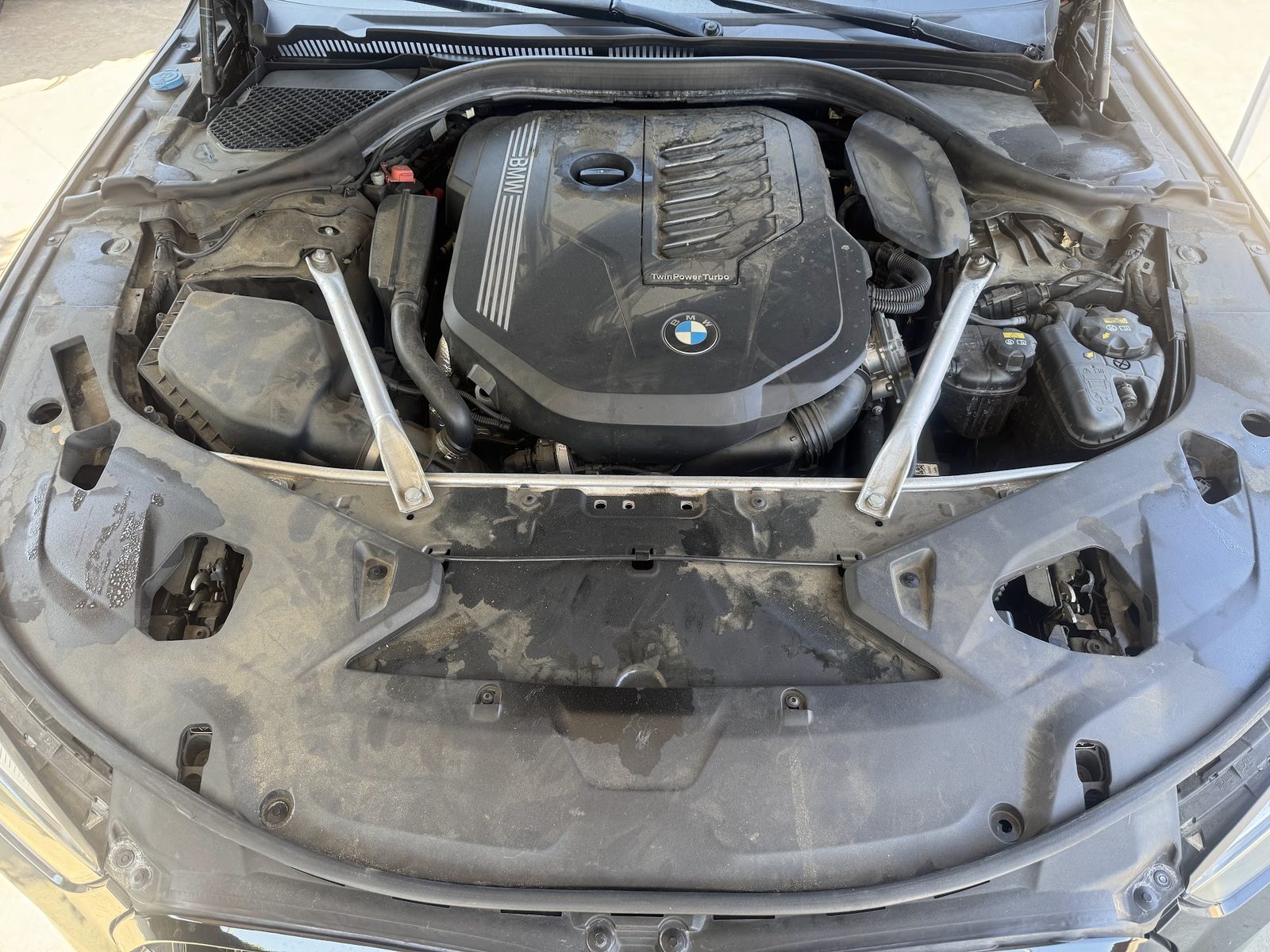
On a BMW we detailed, the engine bay went from dull and dusty to clean and dressed in one visit. Add it to any full detail.


